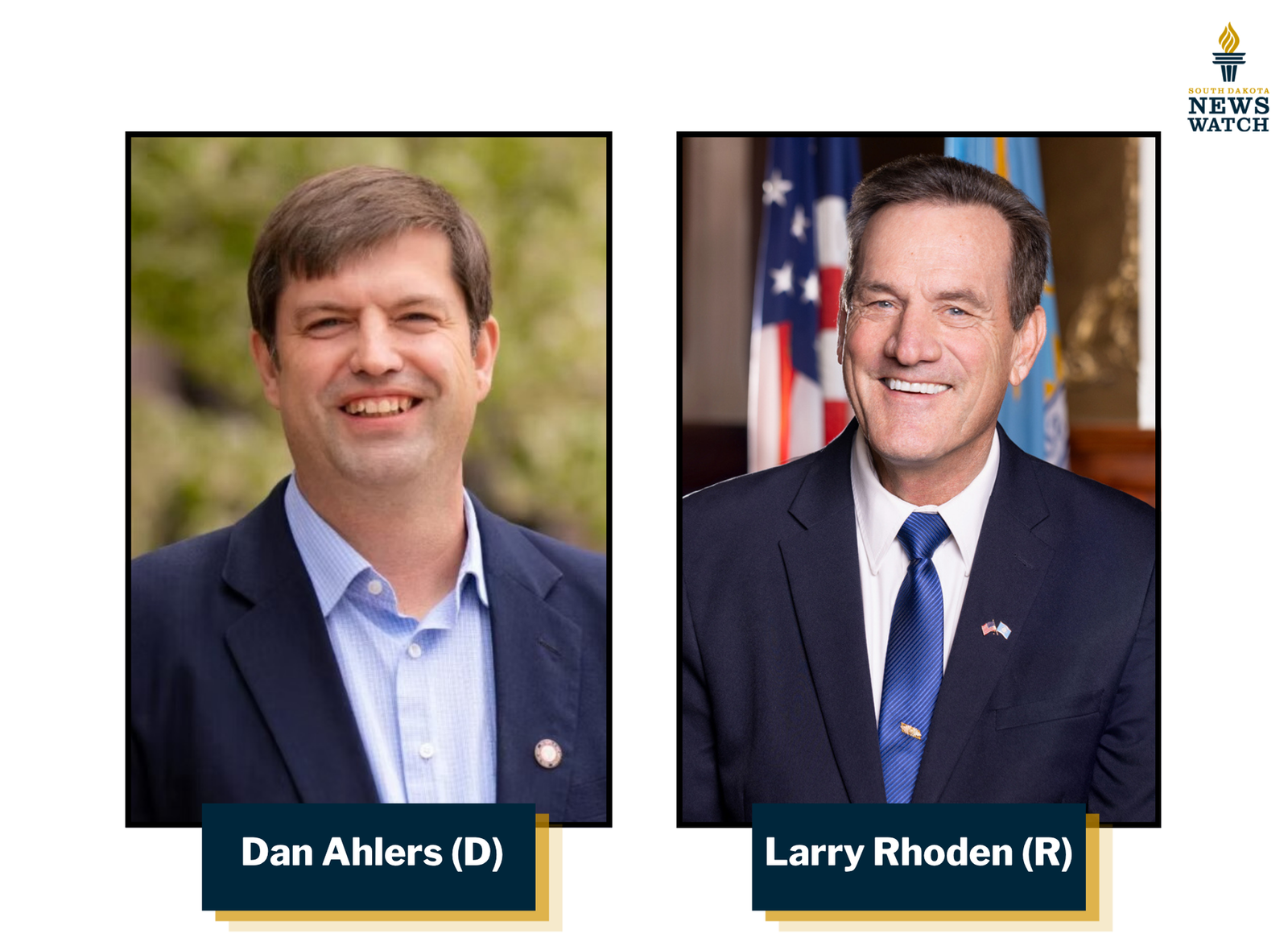
Scientific survey sponsored by South Dakota News Watch and Chiesman Center for Democracy at USD also shows half of voters have a favorable view of Larry Rhoden and half of registered independents support Dan Ahlers.


Republican Gov. Larry Rhoden leads Democratic challenger Dan Ahlers 56% to 36%, according to the latest South Dakota Poll sponsored by News Watch and the Chiesman Center for Democracy at the University of South Dakota.
The Oct. 12-14 survey of 500 likely voters by Mason-Dixon Polling and Strategy, ranked as one of the least-biased and most-factual pollsters, also found that 51% of independents support Ahlers, while 35% support Rhoden and 14% of independents are undecided.

Ian Fury, Rhoden's campaign manager, said South Dakotans know the governor very well. He also said Rhoden’s high favorability and job approval ratings from different demographics show that Rhoden has support from people from different walks of life.
"There were only slightly more Democrats who had an unfavorable view of him than a favorable one, which means that even among Democrats, he's generally well liked," Fury said.
Fury said that contrasts with national politics of today, where it’s “not necessarily a great year to be a Republican on the ballot.”
Get free, fact-based South Dakota news and information in a weekday email. No spam. Cancel any time.
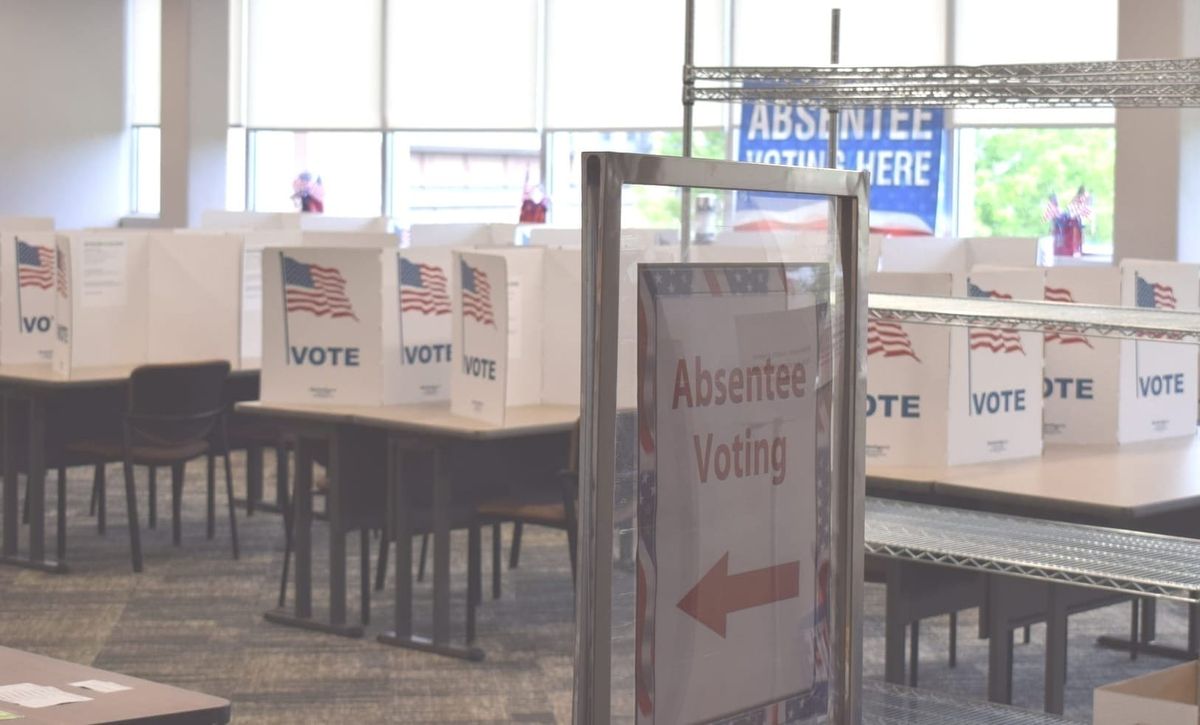
South Dakota's governor leads the executive branch of state government in Pierre and is limited to two consecutive, four-year terms. The general election is Nov. 3. The deadline to register to vote is today, Oct. 19.
Other findings from the poll:
- Fifty percent of South Dakotans have a favorable view of Rhoden.
- A majority of South Dakotans approve of his performance as governor.
- For the most part, voters are sticking with their party.
Here are the poll results, including by survey respondent's gender, age, region and party, key takeaways and candidate reactions.
Ahlers and Rhoden by the numbers
Analysis
Here are some observations from News Watch partners, political scientists and the candidates' campaigns.
Takeaway: Name recognition critical
Jon Schaff, professor of government and director of the Center for Public History and Civic Engagement at Northern State University in Aberdeen, said that Ahlers’ low name recognition could be an indication of a campaign that had to first get to know its voters – whereas Rhoden has the advantage of being the sitting governor.
Thirty-five percent of voters polled did not recognize Ahlers’ name, versus just 1% for Rhoden.
“That's a problem when a third or more of the population don't even recognize their name,” Schaff said. “People are more likely to vote for someone they've heard of versus someone they've never heard of. Sometimes you just have to state the obvious. And so when you've got the statewide office-holders, the incumbents, when they've got, for all intents and purposes, universal name recognition, that's such a built-in advantage.”
Part of the problem with name recognition for South Dakota Democrats is the lack of statewide names to pull from, Schaff said. There are currently no Democrats serving in statewide office, and just eight of the 105 currently serving state legislators are Democrats.
“The (South Dakota Democratic) party is perennially in this sort of vicious cycle. Because they can't get people elected, they can't groom candidates, and because they can't groom candidates, they can't get people elected. You end up in this cycle of inevitably as they're selecting candidates, they've got to make a reach,” he said.
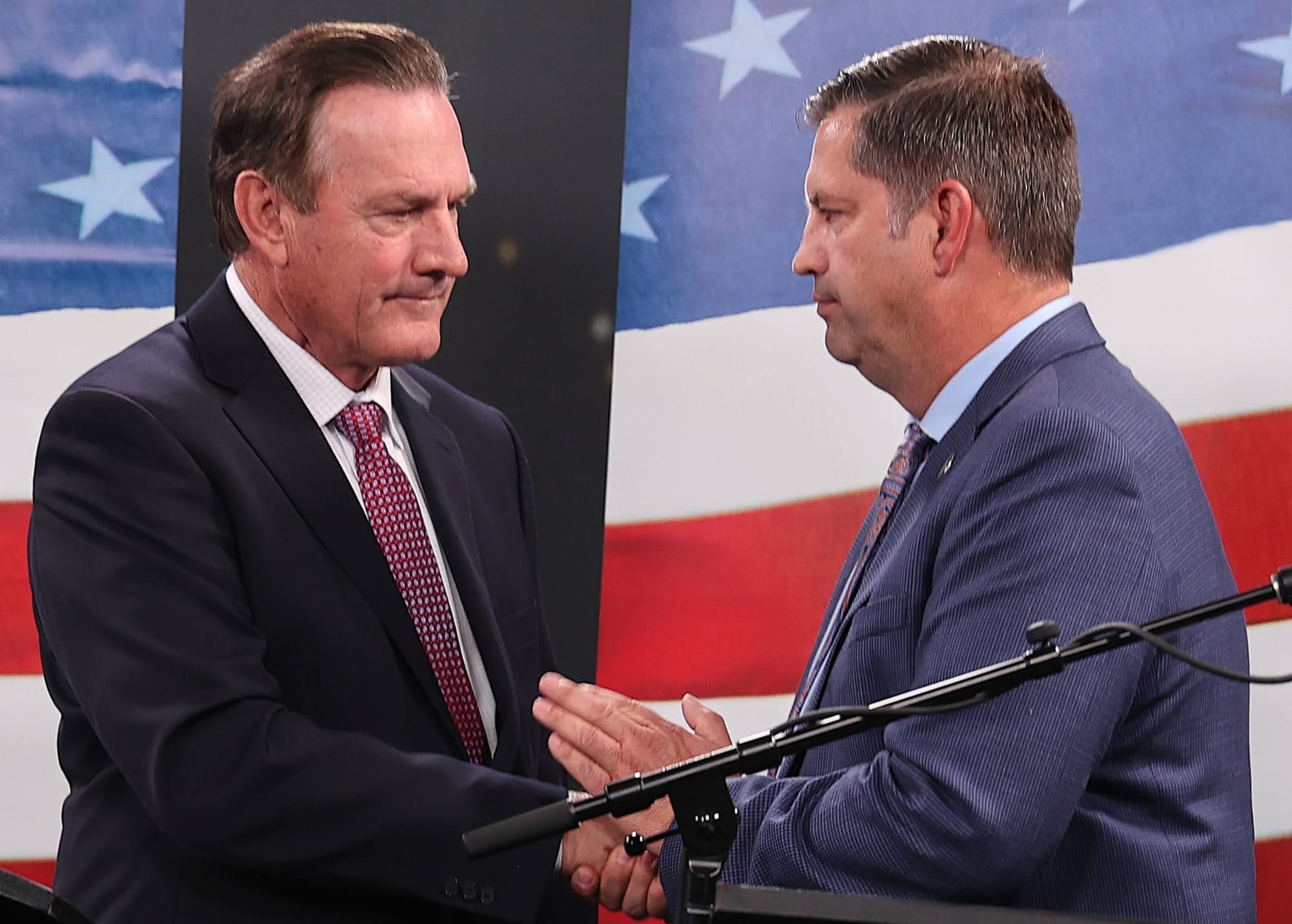
Ahlers, who spent six years in the South Dakota Legislature, told News Watch that the name recognition issue was an expected one for the campaign, especially against a sitting governor. He said he'll continue to advertise and visit with voters in the weeks leading up the election.
"We have signs up everywhere. We do the news interviews, the debates, all of those things, the TV advertising, the digital, and you still got people who have no idea who you are," Ahlers said. "That's always the challenge, is reaching people. So we keep pushing forward, and that's why I've been driving all over the state to give people an opportunity to meet me and visit with me."
Rhoden's support is higher from respondents between 35 and 65 years old, with Ahlers faring slightly better in the younger and older age. Fury said that was not surprising to him, as cost of living is the No. 1 issue on the public's mind right now and disproportionately affects those people.
"When you're just starting out in your career, or when you're retired and have a fixed income, that tends to be when the cost of living squeezes you a little bit more, and that's really a national challenge," Fury said.
Takeaway: Contentious primary may not be a factor
Julia Hellwege, associate professor in the political science department at USD in Vermillion, told News Watch that while the four-person Republican gubernatorial primary may have temporarily divided the party, the poll results indicate that Republicans have mostly fallen back in step.
"We had a very contentious primary season and a contentious summer with municipal elections," Hellwege said. "But I think going into this general, things have settled quite a bit in South Dakota."
Hellwege said that Rhoden's status as sitting governor means that he's had to cooperate with Republicans from a variety of factions, which could make him better able to unify the party after the competitive primary, which saw him challenged by Aberdeen businessman Toby Doeden in a runoff election.
"Rhoden is sort of the middle candidate between the moderate, true establishment Republicans and the MAGA (President Trump's Make America Great Again) wing. However, that's also partly because of his position in the statewide office. I know that split that was apparent in the primary still very much exists in the state Legislature," Hellwege said.
South Dakota News Watch invests in scientific polls to let elected leaders know how constituents think they're doing and also survey people's opinions on important issues. But a good poll isn't cheap, so if you value these stories, please consider helping cover the cost. Thank you!
The others candidates in the June 2 Republican primary were current U.S. Rep. Dusty Johnson and state House Speaker Jon Hansen, neither of whom got enough votes to advance to the July 28 runoff.
Hellwege said that the primary election, though, also casts uncertainty on what a Rhoden win may look like during the legislative session.
"We also know that that primary shifted things. The candidates who are on the general election ballot this fall are going to tip the swings back to more similar to what we saw the session before the current one," Hellwege said. "Is it a convening of the factions of the party? I'm not sure. I don't know that they're there quite yet. I think this upcoming legislative session, the Republican Party has some work to do in the electorate still. I think national party politics will shift things."
Our polling methods
Mason-Dixon Polling and Strategy, ranked as one of the least-biased and most-factual pollsters, conducted the poll of 500 registered voters Oct. 12-14 using random selections from a telephone-matched state voter registration list that included both landline and cellphone numbers from across the state. All respondents indicated they were likely to vote in the November general election. The margin for error is no more than ± 4.5 percentage points.
For bios on the candidates and other information about the race, see our South Dakota voter guide at the link below.
 Molly Wetsch
South Dakota News Watch is an independent nonprofit. Read, subscribe for free and donate at sdnewswatch.org. Contact reporter/Report for America corps member Molly Wetsch: 605-531-7382/ molly.wetsch@sdnewswatch.org. Contact reporter Emily DeCock: 605-736-4396/ emily.decock@sdnewswatch.org.